


 Language: English











Solutions
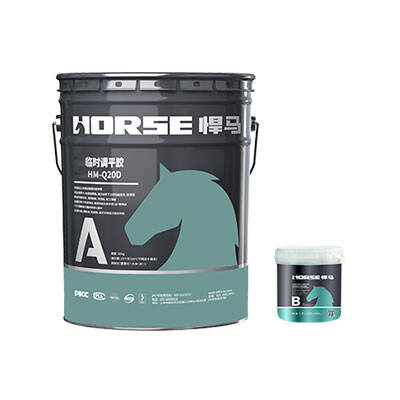
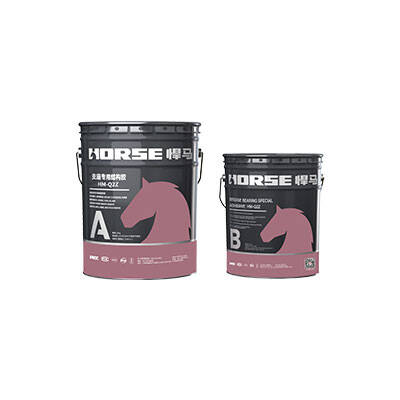
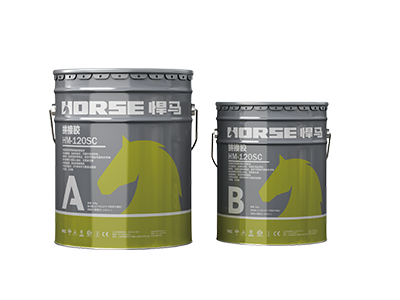
Horse Construction offers full range of structural strengthening materials with technical supports, documentation supports, products supports, project supports.
Reinforcement of Carbon Fiber for Bridge Structures
Bridge Situation
With the continuous aging of global transportation infrastructure, reinforced concrete (RC) bridges inevitably suffer from performance degradation caused by cyclic vehicle loads, environmental erosion, temperature and humidity alternation, and long-term fatigue effects. Common structural defects include flexural cracking, shear damage, stiffness attenuation, and ductility reduction, which severely impair the service performance and structural safety of bridges.

Carbon Fiber Reinforcement
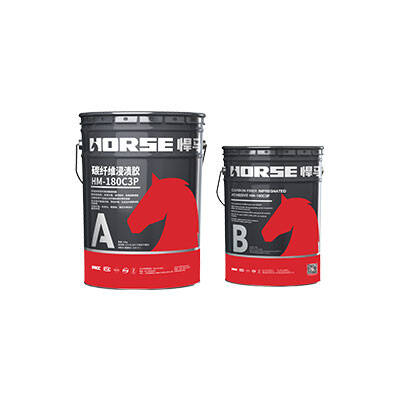
As a mature and efficient minimally invasive rehabilitation technology, Carbon Fiber Reinforced Polymer (CFRP) fabric strengthening has been widely adopted in international bridge renovation projects. Different from traditional passive reinforcement methods, CFRP fabric strengthens bridge structures based on composite material coordination mechanics, forming an integrated stress-bearing system with the original concrete structure via high-performance epoxy resin bonding.
We will discuss these about carbon fiber reinforcement with you guys:
interfacial stress transfer
flexural reinforcement
shear resistance enhancement
concrete confinement
fatigue damage inhibition
Basic Composite Synergy and Interfacial Transfer Mechanism
The core premise of CFRP fabric reinforcement is theinterface bonding and synergistic stress transfer system composed of concrete substrate, epoxy resin adhesive layer, and carbon fiber fabric. Unlike simple surface covering, the whole reinforcement effect relies on the high-strength bonding interface to realize synchronous deformation and force sharing between the new CFRP layer and the original bridge structure.
In the service load stage, the interface maintains elastic coordinated deformation without relative sliding. When the structure bears ultimate load, the high-toughness resin layer can buffer stress concentration, avoid brittle sudden failure, and realize progressive force transfer and failure early warning. This stable interfacial transmission mechanism is the fundamental guarantee for the long-term effectiveness of CFRP reinforcement.
Flexural Reinforcement Mechanism for Bridge Girder Tensile Zones
Reinforced concrete bridge girders have an inherent mechanical defect: concrete has extremely low tensile strength, and almost all tensile stress under service loads is borne by internal steel reinforcement. After long-term service, steel bars are prone to fatigue yield and corrosion attenuation, resulting in insufficient tensile capacity of girder tensile zones, transverse flexural cracks, and continuous stiffness degradation.
CFRP fabric with ultra-high tensile strength and high elastic modulus is pasted on the tensile surface of bridge girders to form an additional tensile reinforcement system parallel to the steel bar framework. Under bending moment, the CFRP fabric shares part of the tensile stress that originally acts on steel reinforcement and concrete cracks, effectively reducing the stress level of internal steel bars and delaying the yield deformation of reinforcement. With the increase of load, the CFRP layer continues to bear incremental tensile stress, restricts the opening and expansion of flexural cracks, reduces the tensile strain of girder bottom fibers, and significantly improves the flexural bearing capacity and bending stiffness of the beam.
Different from steel bonding reinforcement, CFRP fabric has uniform stress distribution and no local stress concentration. It can effectively inhibit the development of micro-cracks in the tensile zone, avoid the continuous expansion of crack height and width, recover the overall flexural performance of aging girders, and improve the load rating and deformation resistance of bridges.
Shear Reinforcement Mechanism for Bridge Web and Diagonal Section
Bridge webs are prone to diagonal shear cracks under the combined action of vertical shear force and principal tensile stress. Once shear cracks penetrate the web, they will rapidly expand along the diagonal direction, easily leading to brittle shear failure of girders, which is one of the most dangerous structural defects in bridge operation.
CFRP shear reinforcement adopts vertical paste, inclined paste or full-web covering layout. Its core mechanism is to build an external shear truss system to share the shear force and principal tensile stress borne by concrete and stirrups. When diagonal shear cracks appear in the web, the transversely arranged CFRP fabric crosses the crack surface and acts as an external tensile tendon to restrain crack opening and dislocation. The continuous CFRP layer forms a closed stress-bearing loop on the web surface, which can effectively transfer diagonal shear stress, reduce the shear strain of the web, and make the shear stress distribution of the section more uniform.
For bridges with insufficient stirrup configuration and degraded shear capacity, CFRP fabric can significantly enhance the shear reserve of the section, suppress the extension of diagonal critical cracks, eliminate the risk of sudden shear failure, and improve the overall shear ductility and safety redundancy of bridge girders.
Confinement Reinforcement Mechanism for Piers and Compression Members
Bridge piers, abutments and cap beams are typical compression-bearing members. Under axial compression, seismic lateral force and vehicle impact, the core concrete is prone to transverse expansion and cracking, resulting in concrete spalling, reduced compressive strength and insufficient structural stability. Different from beam flexural and shear reinforcement, the reinforcement mechanism of vertical members is based on the passive lateral confinement effect of fully wrapped CFRP fabric.
After circumferential wrapping and curing of CFRP fabric, a closed high-strength constraint layer is formed on the outer surface of the pier column. When the core concrete is compressed and deformed transversely, the tensioned CFRP layer provides continuous lateral confining pressure to restrict the free expansion of concrete. This three-dimensional compressive stress state significantly improves the compressive strength, ultimate strain and ductility of core concrete, avoids brittle crushing failure of concrete, and enhances the axial compression bearing capacity and deformation resistance of piers.
In addition, the CFRP confinement layer can effectively restrain the development of vertical cracks in pier concrete, isolate external moisture, salt spray and corrosive media, prevent internal steel bar corrosion and concrete carbonation, and realize the dual effects of structural mechanical reinforcement and environmental durability protection.
Fatigue Damage Inhibition and Structural Durability Enhancement Mechanism
Road and railway bridges bear high-frequency cyclic dynamic loads for a long time, and structural fatigue damage accumulation is the root cause of progressive performance attenuation. Traditional reinforcement technologies such as steel bonding are prone to interface fatigue peeling and metal fatigue fracture under cyclic loads, with limited long-term reinforcement effect.
CFRP fabric has excellent fatigue resistance and low creep characteristics. After reinforcement, the CFRP-concrete composite system can uniformly disperse dynamic cyclic stress, reduce local stress amplitude of structural weak parts, and inhibit the initiation and propagation of micro-fatigue cracks. The flexible fiber structure can buffer dynamic load impact, avoid rigid stress concentration, and effectively reduce the cumulative fatigue damage of bridge structures under long-term vehicle vibration.
Moreover, the integral CFRP protective layer completely covers the structural surface, blocking the erosion path of external corrosive substances. It solves the durability problems of traditional structures such as steel corrosion and concrete weathering, maintains the long-term stability of structural mechanical properties, and extends the service life of reinforced bridges by more than 30 years.
Failure Mode Optimization and Safety Reserve Improvement Mechanism
Unreinforced aging bridges often show sudden brittle failure such as crack penetration and steel bar yielding under overload or extreme working conditions. CFRP fabric reinforcement optimizes the structural failure mechanism fundamentally. Before the ultimate failure, the CFRP interface will produce slight debonding and gradual stress release, providing obvious structural early warning signals and avoiding instantaneous collapse failure.
By increasing the tensile, shear and confinement bearing reserves of the structure, CFRP fabric changes the stress-strain response law of bridge components, improves the structural ductility and energy dissipation capacity, and significantly enhances the safety margin of bridges under extreme loads such as overload, earthquake and impact.
You can find anything here you are in need of, have a trust trying on these products, you will find the big difference after that.

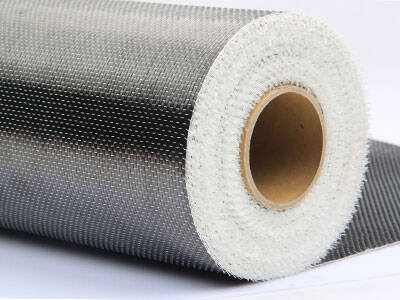
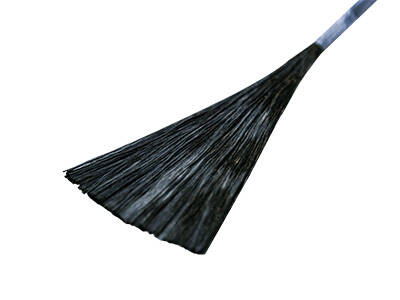
High strength, unidirectional carbon fiber fabric pre-saturated to form a carbon fiber reinforced polymer (CFRP) fabric used to strengthen structural concrete elements.

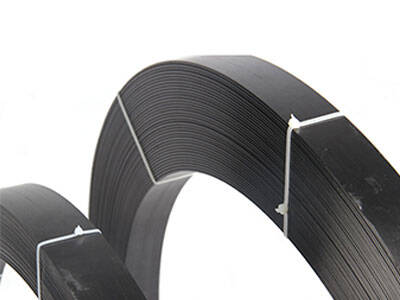
High strength, unidirectional carbon fiber sheet pre-saturated to form a carbon fiber reinforced polymer (CFRP) sheet used to strengthen structural concrete elements.

High strength unidirectional carbon fiber fabric for concrete repair and structural strengthening
