


 Language: English











Solutions
Horse Construction offers full range of structural strengthening materials with technical supports, documentation supports, products supports, project supports.
FRP Pile Jackets(2)
Insights into Underwater Grouting Leakage in FRP Pile Jackets(1)
Point 5: Incorrect Selection of Ancillary Sealing and Grouting Materials
(Incorrect material selection creates an inherent risk of grout leakage; construction management cannot compensate for the material's intrinsic defects.)
Mandatory Material Selection Requirements
Sealing system: Water-swelling rubber sealing strip (expansion ratio ≥ 200%) + specialized underwater two-component epoxy sealant (viscosity: 50,000–100,000 mPa·s; pot life ≥ 45 min; underwater curing rate ≥ 90%);
Primary grouting material: Modified two-component underwater epoxy grout; key specifications: bleeding rate ≤ 1%, expansion rate 0.02%–0.1%, compressive strength ≥ 60 MPa (7 days), bond strength to concrete ≥ 2.5 MPa;
Fasteners: 304 or 316 stainless steel circumferential bands, 316 stainless steel self-tapping screws (tensile strength ≥ 520 MPa), resistant to chloride ion (Cl⁻) corrosion.
Culprit No. 6: External disturbances in the underwater environment compromising the uncured sealing system
(This culprit is highly deceptive—grout leakage often appears only hours after grouting is completed, easily leading to the misconception that the material has suddenly failed.)
Primary sources of disturbance:
Tidal water level fluctuations: Pressure differentials between the inside and outside of the sleeve during rising and falling tides can displace the uncured sealing compound;
Ship propeller disturbances: During construction near shipping lanes, vessel wakes and turbulence continuously scour the base of the sleeve;
Accidental contact during diving operations: Divers may inadvertently bump the sleeve joints while removing auxiliary tooling after grouting;
Water current scouring: During flood seasons, flow velocities exceeding 1.5 m/s can scour the base of the sleeve, potentially eroding the uncured sealing layer within a few hours.
Emergency Response Plan for Grout Leakage
1) Minor Seepage (seepage of water and grout through fine joint lines)
Response Principle: Stop leakage by reducing pressure; prevent escalation.
Immediately slow down the grouting rate and temporarily lower the funnel height to below 0.5m to reduce hydrostatic pressure;
Wipe the exterior of the leakage point dry with cotton waste and quickly apply underwater emergency sealing adhesive (rapid-setting type, curing time ≤ 15 min);
Allow the seal to cure undisturbed for at least 30 minutes before resuming grouting at a low speed.
2) Moderate Grout Loss (continuous flow from the bottom; bottom sealing incomplete)
Response Principle: Halt grouting for inspection and repair; re-seal the bottom.
Immediately stop grouting and divert the grout from the funnel into a standby container;
Deploy a diver to inspect the location and extent of damage to the sealing strip and capture photographic/video evidence;
Locally replace the damaged sealing strip, apply CMSR underwater epoxy sealant to overlap gaps, and install additional local water-swelling waterstop strips;
Re-execute the bottom sealing process (pour 15–20 cm of grout for the base seal and let it set for ≥ 8 hours); resume grouting only after confirming there is no leakage.
3) Severe, Large-Scale Grout Loss (complete failure of the sealing system)
Response Principle: Clear the casing and restart; local repairs are prohibited.
Halt operations and discharge all grout from the casing;
Remove the casing and thoroughly clean residual grout from the pile surface;
Re-install the sealing system from scratch, starting with base surface pretreatment and following standard procedures;
Strictly prohibit partial "sealant patching" without removing the casing; such methods fail to address fundamental sealing defects and will inevitably lead to recurring leaks.
Quality Control Process for Preventing Grout Leakage
Pre-construction Verification (Material Acceptance)**
* Water-swelling rubber sealing strips: Verify expansion ratio (≥200%) and Shore hardness from third-party test reports;
* Underwater epoxy sealing adhesive: Verify underwater curing rate (≥90%) and bond strength (≥2.0 MPa);
* Underwater epoxy grouting material: Verify bleeding rate (≤1%), expansion rate, and 7-day compressive strength (≥60 MPa);
* Stainless steel straps and screws: Verify material certificates (304/316) and corrosion resistance reports;
* Non-standard materials are prohibited; material substitutions require confirmation from the design unit.
Base Surface Acceptance (Diver Self-inspection + Supervisor Witnessing)**
* Underwater roughening completed; surface roughness meets or exceeds CSP-5;
* Pile cracks sealed via injection along the crack line;
* Honeycombing and depressions leveled with underwater repair mortar;
* Base surface thoroughly cleaned; free of silt and loose particles;
* Acceptance signed off; photographic/video records retained.
Sleeve Installation Acceptance (Pre-grouting Inspection)**
* Locking mechanism coated with underwater sealing adhesive along its full length; adhesive layer thickness ≥ 2mm;
* Sealing strip continuous around the circumference; overlap length ≥ 150mm; overlap joint bonded/sealed;
* Fastening strap spacing ≤ 300mm; spacing reduced to ≤ 150mm at ends;
* Sleeve centered and wrapped without forced distortion; male and female locking mechanisms fully engaged;
* Straps re-tightened; records available for verification.
Bottom Sealing Process Acceptance (Critical Hold Point)**
* Bottom 15–20 cm of grout injected and allowed to set for ≥ 8 hours;
* Underwater inspection by diver confirms no leakage at the bottom;
* Grouting resumes only after issuance of bottom-sealing acceptance approval. **Process Control for Layered Grouting**
* Grouting height per lift ≤ 2m; layered grouting required if the height exceeds this limit;
* Symmetrical, multi-point simultaneous grouting;
* Seal top vent holes once pure grout flows out continuously;
* Record mixing and grouting parameters for each batch of grout.
Post-Grouting Curing Control**
* Diving operations prohibited within 24 hours of grouting completion;
* Install warning signs in the construction area to prevent accidental vessel entry;
* Conduct daily inspections during the curing period and record any drop in grout level or leakage.
You can find anything here you are in need of, have a trust trying on these products, you will find the big difference after that.

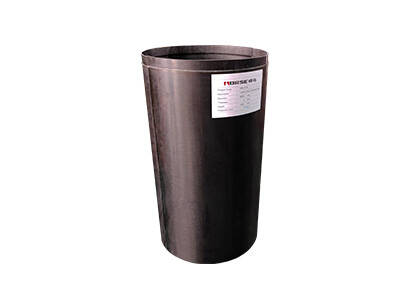
A heavy-duty carbon/glass fiber reinforced polymer(FRP) jacket pile protection system with epoxy grout
