


 Language: English











Solutions
Horse Construction offers full range of structural strengthening materials with technical supports, documentation supports, products supports, project supports.
Key Technical Points For Carbon Plate Reinforcement To Combat Vibration Fatigue

Buildings, industrial plants, bridges, and other structures along rail transit lines are subjected to alternating loads for extended periods, making them highly susceptible to vibration fatigue. This manifests as concrete crack propagation and reinforcement layer delamination failure, severely impacting structural safety. Carbon fiber plates, with their high tensile strength and low relaxation, have become the preferred solution for improving the vibration fatigue resistance of structures.

Material Selection
Materials are the foundation of vibration fatigue resistance, and the performance compatibility between carbon plates and adhesives should be given special attention.
Carbon fiber plates
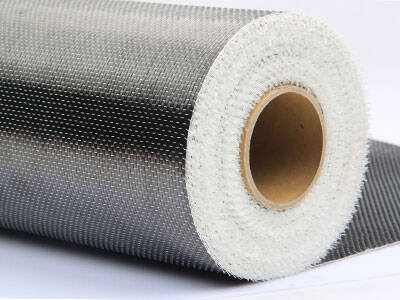
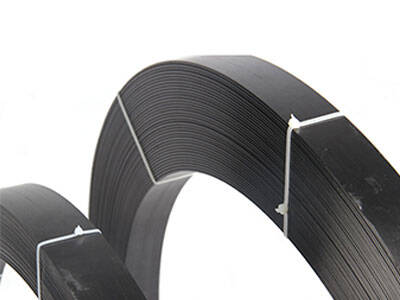
In vibration environments, carbon fiber sheets need to withstand repeated alternating stress. It is recommended to select high-modulus carbon sheets with an elastic modulus ≥230 GPa and tensile strength ≥3000 MPa. These sheets have high fiber uniformity, are free of broken fibers and fuzzing defects, and can effectively reduce the risk of stress concentration. Simultaneously, the fatigue life of the carbon sheet must meet industry standards; after 2 million alternating load tests, the tensile strength retention rate should not be less than 85%.
Adhesives:
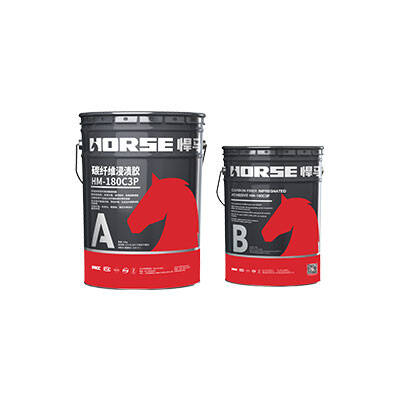
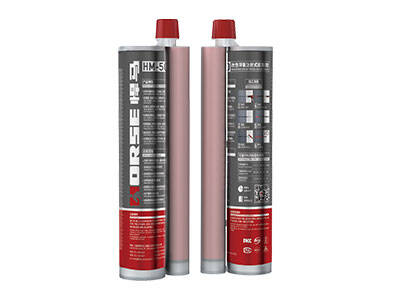
The adhesive layer is crucial for the co-existence of carbon fiber plates and concrete. A tough epoxy adhesive with an elongation at break of ≥3% should be selected. This adhesive has fatigue resistance, moisture and heat resistance, and aging resistance. The shear strength of the bond with carbon fiber plates and concrete is ≥3.0MPa at room temperature, and its performance is stable in a wide temperature range of -20℃ to 60℃.
Reinforcement Design
A reasonable design can reduce the damage of vibration loads to the reinforcement system. The core is to optimize the force path and anchoring method.
A composite reinforcement scheme combining full bonding and end anchoring is recommended.
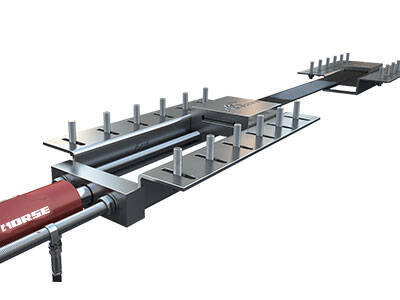
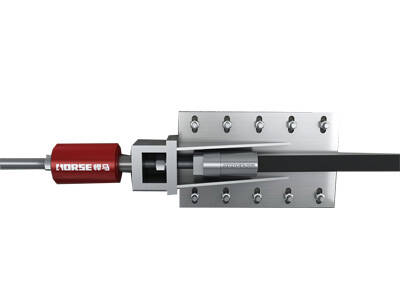
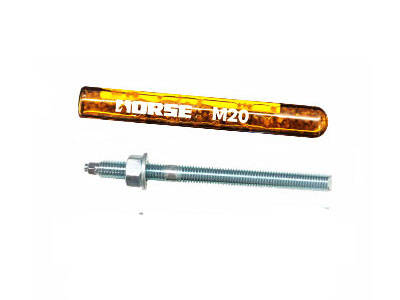
Pure bonding reinforcement is prone to end delamination under vibration loads. Therefore, mechanical anchoring devices, such as anchor bolts or steel plate strips, need to be added to the ends of the carbon steel plate. The anchoring length should be no less than 5 times the width of the carbon steel plate. For large-span components, intermediate anchoring points should be set in sections, with a spacing controlled between 1.5 and 2.0 meters, to shorten the free section length of the carbon steel plate and reduce vibration amplitude.
Targeted Carbon Fiber Plate Arrangement:
For flexural members: Carbon fiber plates are arranged along the entire length of the tension zone. If a negative bending moment zone exists, the carbon fiber plates should be extended at least 500mm to the edge of the negative bending moment zone to avoid abrupt stress changes at the ends.
For shear reinforcement: Ring-shaped or U-shaped carbon fiber plates are used to wrap the member. The circumferential spacing is adjusted according to the vibration frequency—the higher the frequency, the smaller the spacing, generally not exceeding 200mm, to enhance the restraint effect on the concrete.

Construction Process
Construction quality directly determines the fatigue resistance effect, and it is necessary to focus on controlling three key aspects: base treatment, adhesive layer construction, and end treatment.
Substrate Pretreatment: High-Standard Cleaning to Enhance Adhesion
Vibration loads amplify the impact of substrate defects. The concrete surface requires sequential treatment: grinding → dust removal → drying. Grinding until fresh aggregate is exposed, with a surface flatness error ≤2mm/m; using a high-pressure air gun to remove dust, ensuring no oil or water stains; substrate moisture content controlled ≤6%. In humid environments, a moisture-proof primer should be applied to enhance adhesion between the adhesive layer and the substrate.
Adhesive Layer Application: Even Application to Prevent Hollow Areas
Use a "thicker in the middle, thinner at the edges" application method, controlling the adhesive layer thickness to 1.5~2.5mm. After attaching the carbon fiber plate, use a special roller to roll along the fiber direction to remove air bubbles, ensuring a hollow area ≤5% (single hollow area ≤100cm²). Structural vibration interference is strictly prohibited during curing. When the ambient temperature is below 5℃, insulation measures must be taken to extend the curing time to at least 72 hours.
You can find anything here you are in need of, have a trust trying on these products, you will find the big difference after that.

High strength carbon fiber reinforced polymer (CFRP) strip / laminate / plate for structural strengthening and concrete repair

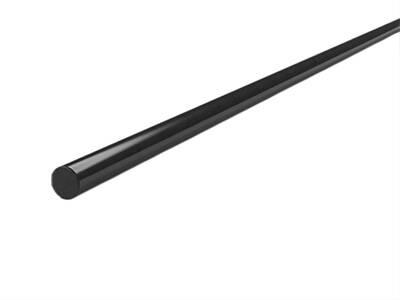
High strength carbon fiber reinforced polymer(CFRP) plate for structural strengthening and concrete repair

HM-1.4TT is a high strength, high modulus unidirectional carbon fiber reinforce polymer(CFRP) laminate for structural strengthening
